
- September 4, 2026
- Universal White Cement
- Pool Plaster
- No Comments
The Science Behind Seasonal Cement Blends for Pool Plastering
Universal White Cement explains how temperature, pozzolanic chemistry, and cement formulation influence working time, installation consistency, and long-term pool finish performance.
For professional pool plasterers, timing is critical. From mixing and pumping to troweling and aggregate exposure, every stage of installation depends on cement behaving within a predictable working window.
Temperature can significantly change that window. Cement that provides comfortable working time during summer may respond differently on a cool morning. As temperatures decline, hydration slows, extending setting times and affecting when crews can proceed with finishing operations.
For exposed aggregate finishes, these changes are especially important. Material that remains too soft can complicate exposure, while a rapidly stiffening mixture may leave insufficient time to finish uniformly.
At Universal White Cement, we address these seasonal challenges through cement formulation. Our Summer and Winter Blends are designed to provide application characteristics suited to different temperatures while maintaining the performance benefits of blended white cement.
Understanding these differences begins with the chemistry behind the material.
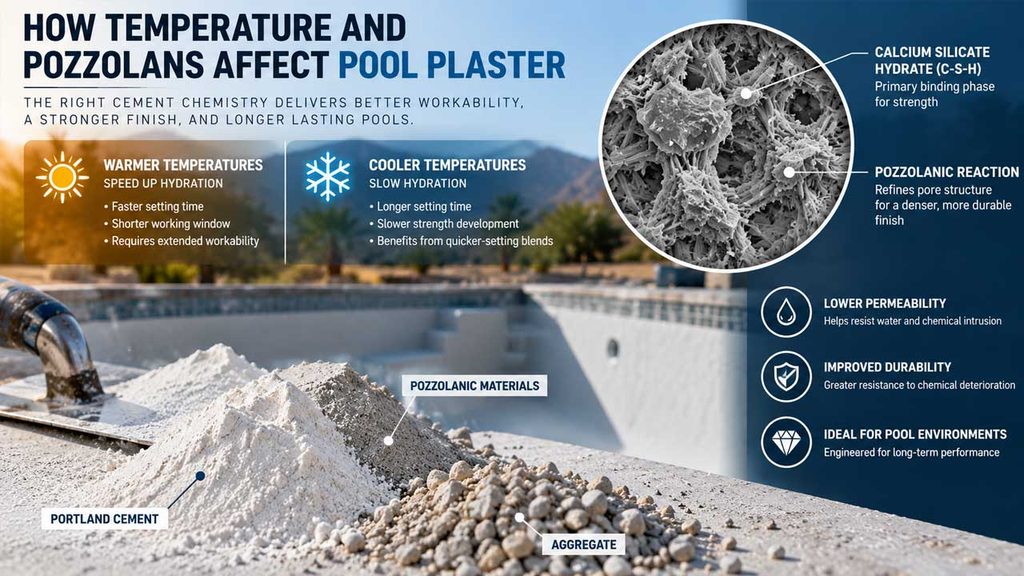
How Temperature and Pozzolans Affect Pool Plaster
When Portland cement is mixed with water, hydration produces compounds that bind the material together and develop strength. Among these is calcium silicate hydrate (C-S-H), the primary binding phase responsible for the integrity of hardened cement.
Higher temperatures generally accelerate hydration, shortening the time available for placement and finishing. Cooler temperatures slow the process, delaying setting and early strength development.
The American Concrete Institute’s Guide to Cold Weather Concreting explains how lower temperatures influence hydration and the conditions necessary for proper strength development.
For plastering crews, the practical challenge is maintaining sufficient workability for pumping, placement, and troweling while allowing the material to develop firmness at the appropriate time for subsequent operations.
Pozzolanic materials play an important role in controlling these characteristics.
Pozzolans contain reactive silica or alumina that combines with calcium hydroxide, a byproduct of Portland cement hydration, to form additional cementitious compounds. This reaction can refine the hardened cement’s pore structure, reducing permeability and improving resistance to certain forms of chemical deterioration.
These characteristics are particularly valuable in swimming pools, where interior finishes remain continuously exposed to chemically treated water.
Universal White Cement incorporates proprietary pozzolanic materials into its blended cement formulations to support workability, strength, and durability.
However, pozzolanic materials also influence setting behavior. Depending on their composition and concentration, some combinations extend working time, an advantage in hot weather that can become less desirable as temperatures fall.
The objective is therefore not simply to increase pozzolanic content, but to balance its benefits with the setting characteristics required for the installation.
Why Universal Offers Seasonal Cement Formulations
Universal White Cement developed separate seasonal blends to address the different challenges plastering crews encounter throughout the year.
Our Summer Blend incorporates a proprietary pozzolanic formulation designed to extend working time when elevated temperatures accelerate cement hydration.
According to our published product information, the formulation can provide approximately 15 to 20 additional minutes of working time under the conditions represented by that guidance. Actual results depend on temperature, mixture proportions, and application conditions.
For exposed aggregate finishes, Summer Blend also promotes pebble retention during exposure, helping crews maintain control over the finishing process.
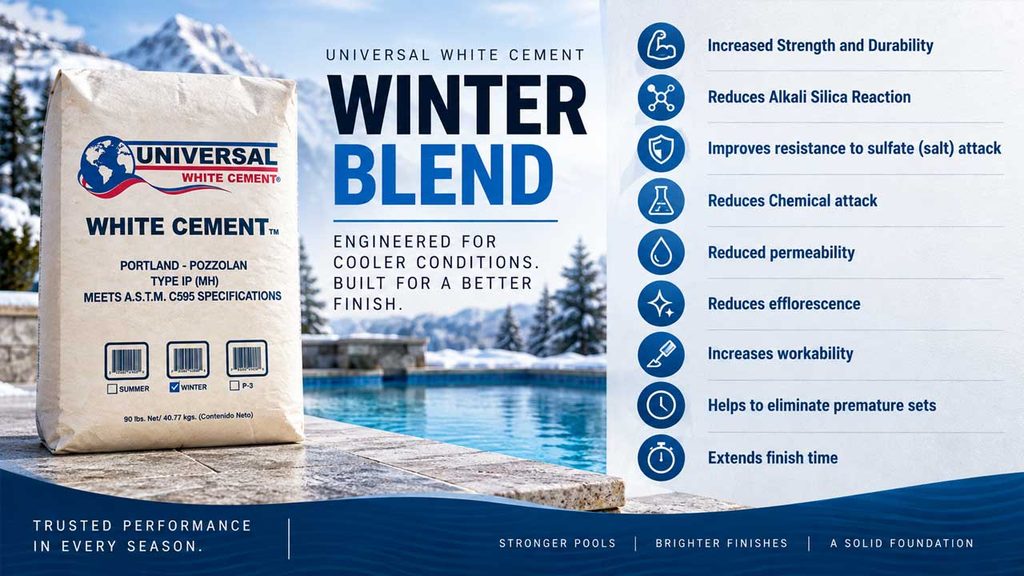
Our Winter Blend uses a lower proportion of pozzolanic materials to promote quicker setting under cooler conditions.
This adjustment helps counter the prolonged setting times associated with lower temperatures while retaining desirable workability and hardened-material characteristics.
The distinction is straightforward: summer applications often benefit from additional working time, while winter installations may require a formulation that reaches the appropriate finishing stages sooner.
Universal also offers P3 Cement for applicators who prefer greater control through separate additive systems. P3 contains one pozzolan to assist with pumping and body and is intended for use with compatible additives, including our Plaster Matrix, Pebble Matrix, and Craze Guard products.
Together, these formulations allow contractors to select cement based on seasonal conditions and their preferred application methods.
Setting Time Is Not the Same as Curing Time
Although seasonal formulations influence setting behavior, faster setting should not be confused with accelerated curing.
Setting describes the development of rigidity as cement loses plasticity. Curing involves maintaining conditions that support continued hydration and strength development.
The National Plasterers Council’s guidance on pool plaster hydration and curing explains that cementitious finishes continue hydrating after initial hardening. Once the surface reaches an appropriate stage, immersion curing helps maintain the moisture necessary for continued strength development.
A winter formulation may help crews reach finishing stages sooner, but it does not eliminate curing requirements or establish a universal pool-filling schedule.
Contractors should continue following the applicable manufacturer’s instructions for finishing, filling, and startup.
Controlling Jobsite Variables During Cooler Weather
Selecting the appropriate cement is only one part of managing seasonal installations.
Substrate temperature can significantly influence plaster behavior. A pool shell exposed to several cold nights may remain cool even after daytime air temperatures rise, slowing hydration in freshly applied material.
Mixing water and aggregate temperatures also affect the initial temperature of the mixture. Meanwhile, wind and low humidity can promote surface moisture loss, creating additional finishing challenges.
Contractors should evaluate actual material and substrate conditions rather than relying exclusively on the forecasted daytime temperature.
The American Concrete Institute’s cold-weather construction recommendations emphasize temperature management, protection against early freezing, and appropriate curing conditions.
A winter cement formulation is not an antifreeze and does not eliminate minimum application temperature requirements.
Water content is another critical variable. Adding excessive mixing water to improve workability increases the water-to-cementitious-materials ratio, potentially reducing strength and increasing porosity and shrinkage.
Using a formulation suited to the conditions, maintaining consistent batching procedures, and following manufacturer recommendations provides a more controlled approach than attempting to compensate through field adjustments.
Protecting Long-Term Finish Performance
While seasonal cement selection influences installation, the hardened finish must withstand years of continuous immersion and exposure to pool water chemistry.
Pozzolanic reactions contribute to durability by consuming calcium hydroxide and producing additional binding compounds. Depending on the formulation, this can reduce permeability and improve resistance to sulfate attack and alkali-silica reaction.
Universal White Cement’s blended formulations are designed with these performance objectives in mind.
However, material selection cannot compensate for improper installation, inadequate curing, or aggressive water chemistry.
It is also important to distinguish reduced permeability from waterproofing. The National Plasterers Council’s technical guidance on watertightness explains that water retention depends on the combined performance of the pool structure and interior finish.
A properly formulated cementitious coating contributes to that system but does not replace sound structural construction.
For applicators, this reinforces the importance of considering both installation characteristics and long-term durability when selecting materials.
Choosing the Right Cement for the Installation
Professional plastering crews already adapt their scheduling, equipment preparation, and finishing techniques to changing weather. Cement selection should be part of that planning.
A summer formulation that extends working time can help crews manage rapid hydration during hot-weather applications. A winter formulation designed for quicker setting can provide a more suitable working window when temperatures decline.
Neither replaces experienced workmanship or proper environmental controls.
At Universal White Cement, our seasonal formulations reflect the practical demands of professional pool plastering. By adjusting cement chemistry to accommodate changing conditions, we aim to help applicators achieve predictable handling characteristics without compromising the performance objectives of the finished material.
Understanding how temperature and pozzolanic chemistry interact allows contractors to make more informed material selections, maintain consistent installation practices, and support the durability of the surfaces they install.
For additional product specifications and application guidance, visit Universal White Cement.