
- August 27, 2026
- Universal White Cement
- Pool Plaster
- No Comments
What Causes Crazing and Hairline Cracks in Pool Plaster — And How to Help Prevent Them
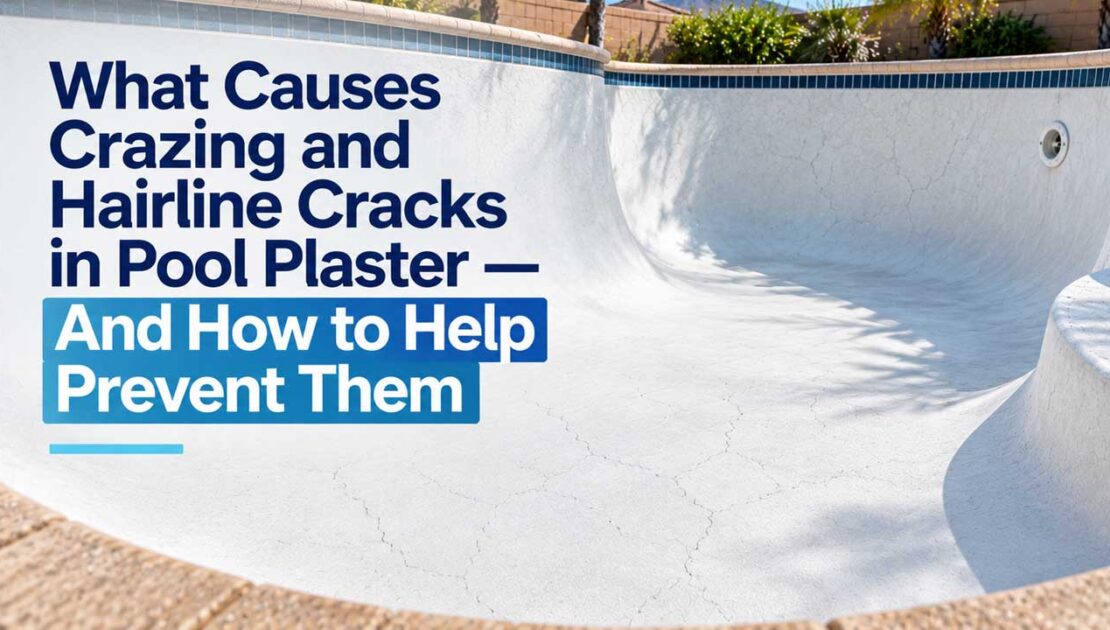
Hairline cracks in a pool finish can be alarming. They may appear as isolated lines, a network of fine cracks across the surface, or subtle patterns that become much more noticeable once the pool is filled.
But not every crack means the pool shell has failed.
In cementitious pool finishes, very fine surface cracking is often referred to as crazing or checking. The National Plasterers Council describes crazing as check cracks or hairline cracks and notes that they can be particularly noticeable in colored finishes.
For plasterers, however, the more useful question isn’t simply what crazing looks like. It’s what happens during mixing, application and curing that can make a cementitious finish more susceptible to it—and what can be done to reduce that risk.
Crazing Isn’t the Same as a Structural Crack
The first distinction is an important one.
A structural crack generally involves movement or failure in the underlying concrete or shotcrete shell. Those cracks can extend through the substrate and may require investigation beyond the pool’s interior finish.
Crazing occurs within the cementitious finish itself. It typically appears as very fine, shallow cracks or interconnected patterns across portions of the surface.
That distinction matters because repairing or preventing the two problems involves very different considerations. A plaster additive isn’t intended to correct movement in an unstable pool shell. Crazing, on the other hand, is closely related to the behavior of the cementitious finish and the conditions under which it is placed and develops strength.
Why Does Pool Plaster Craze?
Pool plaster begins changing the moment cement and water are mixed.
Hydration starts immediately, and the material gradually transitions from a workable plaster into a hardened cement matrix. At the same time, the material can experience dimensional changes as it sets, loses moisture and develops strength.
If the surface dries too rapidly or excessive shrinkage occurs while the plaster is still relatively young, stresses can develop within the finish.
When those stresses become greater than the material can accommodate, fine cracks can form.
That’s why crazing can’t always be traced to one simple cause. A number of conditions can contribute, including excessive water in the mix, rapid moisture loss, hot or windy conditions, substrate absorption, finishing practices and curing conditions.
Some of those factors can compound one another.
A hot substrate, for example, can pull moisture from freshly applied plaster while high temperatures and wind simultaneously increase evaporation from the exposed surface. The material may be developing strength while also being subjected to stresses caused by moisture loss and shrinkage.
This makes the early life of a pool finish particularly important.
Water-to-Cement Ratio Matters
Water is necessary for hydration and workability, but more isn’t necessarily better.
Adding excessive water to a cementitious mix increases the space originally occupied by water within the hardened material. As excess water leaves, it can contribute to greater porosity and shrinkage.
That can affect strength, density and durability.
This is also why repeatedly adding water to make plaster easier to work isn’t an ideal way to compensate for material that’s becoming difficult to finish.
A properly designed plaster mix is intended to provide the necessary workability while maintaining an appropriate relationship between cement, aggregate, water and any admixtures.
The objective is to give installers enough time and workability to properly place and finish the material without unnecessarily increasing its water demand.
Rapid Moisture Loss Creates Another Challenge
Even a properly proportioned mix can face difficult conditions once it reaches the pool.
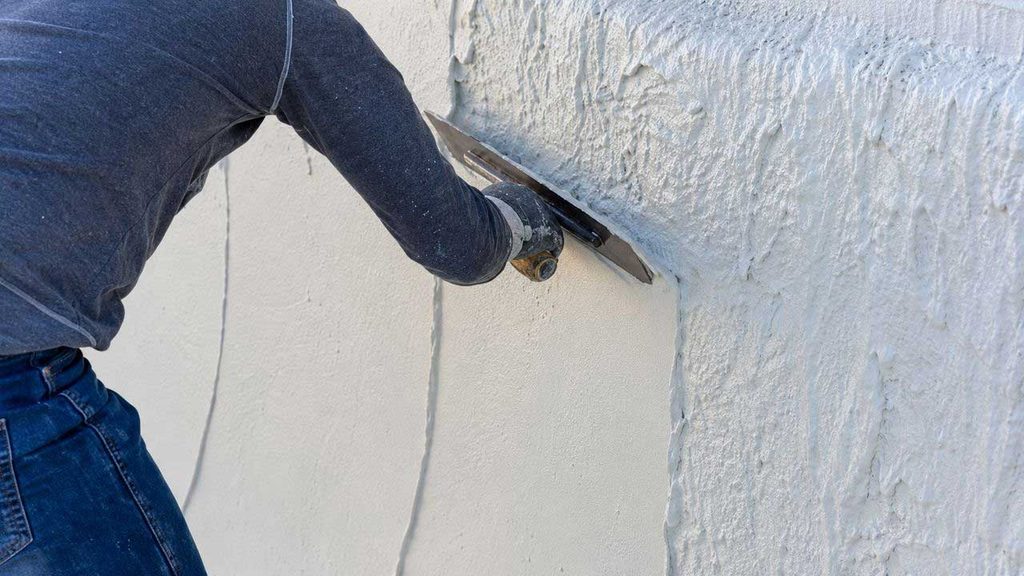
Hot weather, low humidity and wind can accelerate evaporation from the surface. A dry or highly absorptive substrate can draw moisture from the other side.
That means freshly placed plaster can effectively be losing moisture from two directions.
If that happens too rapidly during the period when the material is still developing its structure and strength, the resulting shrinkage can increase the potential for fine surface cracking.
This is one reason experienced plasterers pay close attention to the entire jobsite rather than simply checking the day’s high temperature.
Wind, humidity, direct sunlight and substrate conditions all matter.
Protecting materials from excessive heat, properly preparing the substrate and managing working and finishing times are all part of reducing unnecessary stress on fresh plaster.
The First Days of a Pool Finish Matter
A pool finish may look complete when the plaster crew leaves, but chemically, the cement is nowhere near finished.
Hydration continues as the material cures and develops strength.
The National Plasterers Council notes that roughly 70% of cement hydration occurs within the first seven days after application, with additional hydration continuing much more slowly afterward.
Those early stages therefore have an outsized influence on the development of the cement matrix.
This is also why plasterers and material manufacturers put so much emphasis on proper filling and startup procedures. The finish isn’t simply a decorative coating that has dried onto the pool shell. It’s a developing cementitious material undergoing chemical reactions that influence its ultimate characteristics.
Strength development during this period is particularly important.
A stronger, denser cement matrix is better positioned to withstand the physical and chemical stresses a pool finish will encounter throughout its service life.
And that creates another opportunity to address crazing: the composition of the material itself.
Building Greater Resistance to Crazing Into the Mix
Installation practices matter tremendously, but modern plasterers also have admixtures available to modify the performance of cementitious finishes.
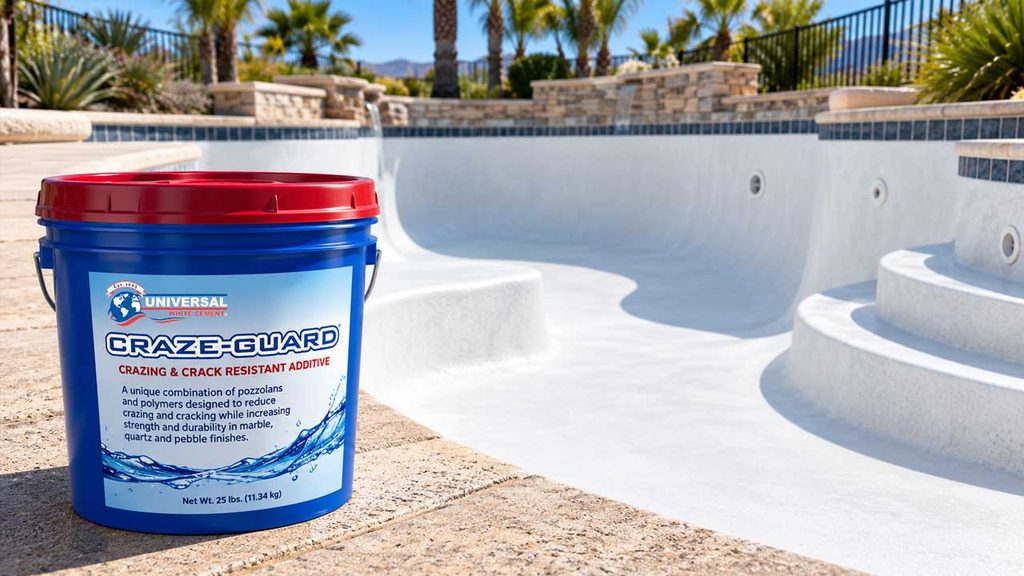
That’s the idea behind Craze Guard from Universal White Cement.
Craze Guard combines pozzolans and polymers and is designed specifically to reduce crazing and cracking in marble, quartz and pebble pool finishes while increasing strength and durability. Universal also designed the product so it can complement other pozzolan-blended cements without requiring additional pump aids.
The chemistry behind that approach is important.
Why Pozzolans Matter
Portland cement hydration produces calcium hydroxide as one of its byproducts. Pozzolanic materials can react with calcium hydroxide to form additional cementitious compounds, contributing to a denser matrix.
Universal uses this same principle throughout its cement technology. The company says its pozzolan blends react with calcium hydroxide to create a denser cement matrix, with benefits that include increased strength and durability and greater resistance to chemical attack.
For a pool finish, density matters.
A dense, well-developed cement matrix provides a stronger framework for the aggregates and other components of the finish and can improve its ability to withstand the demanding environment inside a swimming pool.
Adding Polymers to the Equation
Craze Guard combines that pozzolanic technology with polymers designed to further modify the performance of the cementitious material.
The result is an additive intended to increase the strength and durability of the finish while reducing its susceptibility to crazing and cracking.
Universal places particular emphasis on early strength development. According to the company, high strength during the early stages of curing is critical to helping protect cement against stresses and future deterioration.
That’s an important distinction.
Craze Guard isn’t a repair product for cracks that have already appeared, nor can an admixture compensate for an unstable substrate or poor installation practices. It’s designed to change the characteristics of the cementitious mix itself so the finished material develops with greater strength and resistance.
Prevention Starts Before the Pool Is Filled
There isn’t one product or installation technique that eliminates every possibility of crazing.
Pool plaster is installed in the field, often under challenging conditions. Temperature changes. Wind changes. Humidity changes. Every substrate is slightly different, and every crew has to manage the material as those conditions evolve.
Reducing the risk of crazing therefore requires looking at the installation as a complete system.
The mix needs an appropriate water-to-cement ratio. The substrate needs to be properly prepared. Crews need sufficient working time to place and finish the material correctly. Excessive moisture loss should be controlled, and proper filling and startup procedures need to follow installation.
Mix design provides another layer of protection.
Products such as Universal Craze Guard give plasterers the ability to incorporate pozzolans and polymers specifically intended to increase strength and reduce crazing and cracking without fundamentally changing how the material pumps and works.
Because once hairline cracks appear, the conversation becomes about what happened.
The better conversation starts before the plaster ever reaches the pool: What can be done to help prevent them in the first place?