

- August 15, 2026
- Universal White Cement
- Pool Plaster
- No Comments
How Hot Weather Affects Pool Plaster — And How Plasterers Control Set Time
Hot weather can make an already demanding pool plaster installation even less forgiving. As temperatures rise, cementitious materials tend to set faster, leaving crews with less time to pump, place, trowel and finish the material before it begins to harden.
For experienced plasterers, this isn’t exactly news. Summer installations have always required crews to pay closer attention to timing and conditions. What has changed is the number of tools available to help contractors manage those conditions instead of simply racing against them.
Understanding what heat does to cement — and knowing how to control set time without compromising the mix — can make a significant difference in both the installation process and the finished product.
Why Pool Plaster Sets Faster in Hot Weather
Pool plaster relies on hydration, the chemical reaction that begins when cement and water are combined. Temperature has a significant influence on the rate of that reaction. As temperatures increase, hydration generally accelerates, which means the material begins setting sooner.
But air temperature is only part of the equation.
The temperature of the pool shell can have a major impact on working conditions. A concrete or gunite substrate exposed to direct sunlight can become considerably hotter than the surrounding air and pull moisture from freshly applied plaster more rapidly.
Humidity and wind also matter. Hot, dry, windy conditions can accelerate evaporation at the surface while the cement itself is already reacting more quickly because of the elevated temperature.
The result can be a much narrower working window.
The National Plasterers Council notes that hot-weather plastering conditions can contribute to faster set times, increased surface drying and greater water demand, with the potential for issues such as shrinkage cracking, cold joints and uneven coloration. The organization also emphasizes that there isn’t one specific ambient temperature that defines hot-weather plastering because substrate temperature, humidity, wind, material temperature and other conditions all interact.
For the plastering crew, all of those variables ultimately affect one particularly valuable commodity on installation day: time.
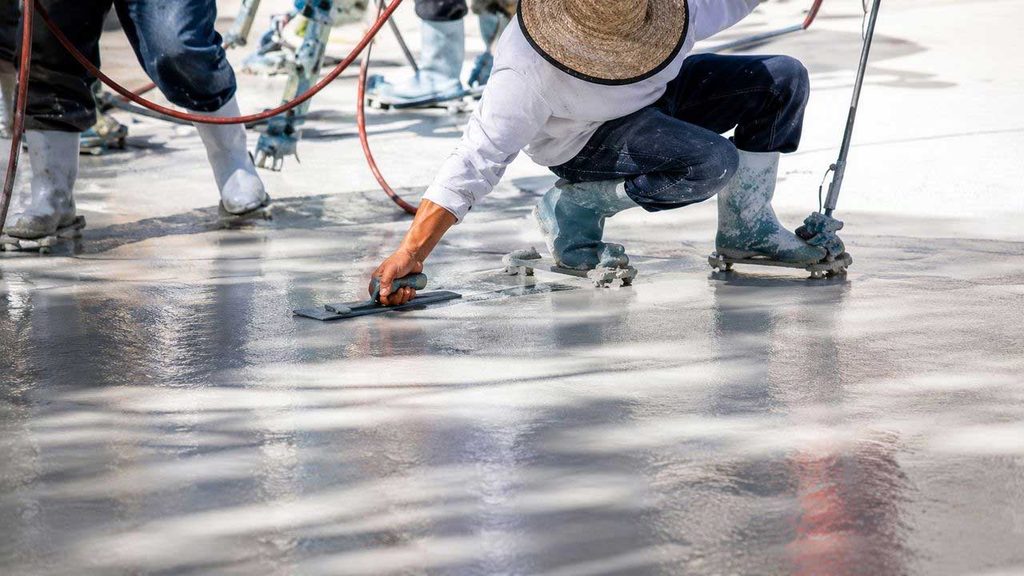
Less Working Time Means Less Margin for Error
Pool plaster isn’t simply mixed and poured into place. Crews need enough time to move the material through the pump, place it throughout the vessel and work the surface through the different stages of finishing.
When the plaster begins setting faster than expected, that entire process gets compressed.
Pumpability can become more difficult as the material stiffens. Applicators may have less time to properly place the material, while finishers can find themselves working one area of the pool as another section advances further into its set.
That becomes especially challenging on larger pools or vessels with complicated geometry.
Steps, benches, spas, sun shelves, raised walls and other architectural elements all take additional time to plaster and finish. What might be manageable on a relatively straightforward pool can become considerably more difficult when the crew has thousands of square feet of surface area or intricate details to work through.
Experienced crews can compensate for a faster set to a point, but simply working faster isn’t always the best answer. The objective is to keep the material within a manageable working range long enough for the crew to properly install and finish it.
Managing the Conditions Before Changing the Mix
Good hot-weather plastering starts before the first batch reaches the pool.
Scheduling the installation earlier in the day can help crews avoid the most intense afternoon temperatures. Materials can be protected from direct sunlight, and pump hoses can be kept shaded where possible to prevent additional heat from being introduced as plaster travels to the vessel.
The substrate also deserves attention.
Pre-wetting a hot pool shell can help reduce its temperature and absorptive capacity, provided standing water isn’t left behind before plaster is applied. Keeping the substrate from becoming excessively hot can help prevent it from pulling moisture from the fresh plaster too rapidly.
Cold mixing water or ice may also be used to help control the temperature of the mix itself.
Crew size matters as well. When conditions are expected to shorten the working window, having enough experienced applicators and finishers on the job can help keep placement moving and prevent sections of the pool from getting too far ahead of the crew.
These aren’t particularly glamorous solutions, but they illustrate an important point: successful hot-weather plastering is about managing several variables at once.
Why Simply Adding More Water Isn’t the Answer
When plaster starts getting stiff, adding water can seem like an easy way to regain workability.
The problem is that water isn’t just there to make plaster easier to move around. The water-to-cement relationship is a fundamental part of the mix design, and altering it can change the characteristics of the hardened cement matrix.
Excess water can increase porosity and shrinkage while reducing density and strength. It can also contribute to variations in the finished surface.
The better approach is to control the factors causing the material to become difficult to work in the first place.
That’s where mix design and purpose-designed admixtures become another part of the hot-weather toolbox.
Controlling Set Time With Admixtures
Set-delay admixtures allow plasterers to influence the rate at which cementitious material sets without simply increasing the amount of water in the mix.
The objective isn’t necessarily to make plaster set slowly. It’s to make it set at a rate appropriate for the conditions and the installation.
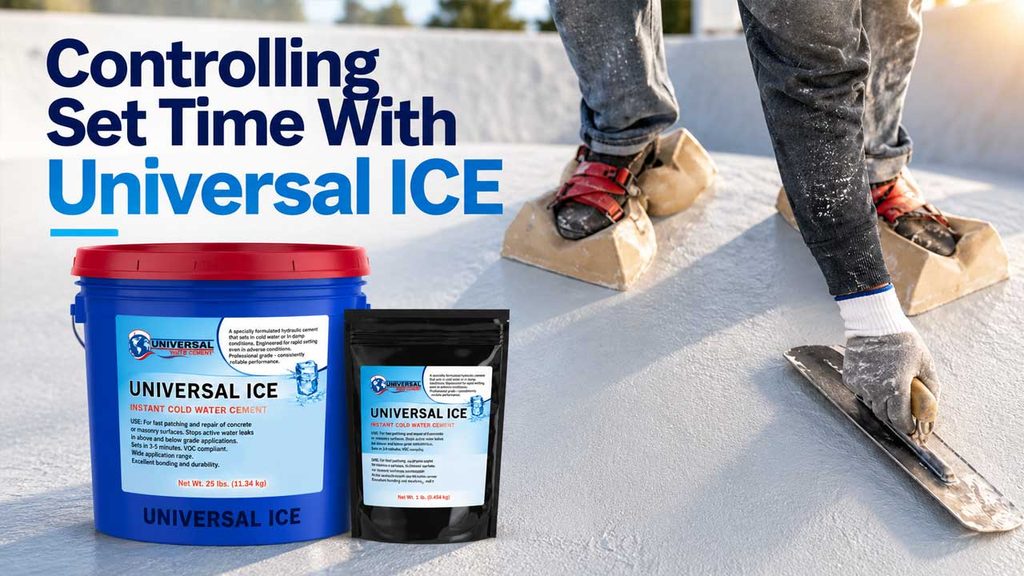
Universal White Cement developed Universal ICE Set Delay specifically for this purpose. The admixture is designed to help maintain pumpability, workability and finishability when conditions accelerate the normal setting process.
According to Universal, each packet or scoop of ICE typically provides approximately 15 additional minutes of working time, although actual dosage can vary depending on temperature, humidity, wind, substrate absorption and the particular mix design.
That ability to adjust working time gives plasterers another degree of control when jobsite conditions aren’t cooperating.
Rather than asking an entire crew to race against a mix that’s setting too quickly, the material can be adjusted to provide a more appropriate working window.
Why an Extra 15 Minutes Can Matter
Fifteen minutes may not sound like much until you’re in the middle of plastering a swimming pool.
On a large installation, additional working time can affect nearly every stage of the job.
It can help keep material pumpable while crews are still placing plaster in the vessel. It can provide applicators more time to maintain consistent coverage. Most importantly, it gives finishers additional time to properly work the surface through critical troweling stages.
Those extra minutes can become even more valuable as the complexity of the pool increases.
A straightforward rectangular vessel and a large custom pool with spas, benches, shelves, transitions and architectural features present very different demands on a plaster crew. The more surface area and detail involved, the more valuable predictable working time becomes.
Consistency from batch to batch matters too.
Conditions can change substantially over the course of a morning. A job that begins in relatively mild conditions can become considerably hotter as the sun rises and begins heating the shell, equipment and materials.
Being able to adjust set time allows plasterers to compensate as those conditions change rather than allowing later batches to behave dramatically differently from earlier ones.
Hot Weather Is More Than a Number on the Thermometer
One of the biggest mistakes when thinking about hot-weather plastering is focusing entirely on the forecast.
An 85-degree day doesn’t necessarily create the same plastering conditions everywhere.
A shaded pool with little wind and moderate humidity presents a different environment than a pool shell that’s been baking in direct sunlight with dry air and steady wind moving across the surface.
Material temperature matters. Mixing-water temperature matters. Substrate temperature matters. Humidity, wind and direct sunlight matter.
Even different areas of the same pool can experience different conditions.
One wall may be exposed to direct sunlight while another remains shaded. Wind may move across one portion of the vessel more aggressively than another. Those differences can affect moisture loss and the rate at which the surface progresses during finishing.
That’s why experienced plasterers don’t simply look at the temperature and decide whether it’s a good day to plaster. They evaluate the entire jobsite.
More Control Means a More Manageable Installation
There is no way to eliminate weather from pool plastering. Contractors work outdoors, often in some of the hottest swimming pool markets in the country, and summer installations aren’t going away.
The objective is to reduce how much those conditions dictate the installation.
Starting earlier, managing substrate temperature, protecting materials from direct sunlight, controlling mix temperature and staffing the job appropriately can all help crews maintain a workable installation window.
Set-control admixtures provide another tool when those measures alone aren’t enough.
Products such as Universal ICE allow plasterers to make deliberate adjustments to working time based on the conditions they’re actually encountering on the job.
Ultimately, hot-weather plastering isn’t about beating the clock. It’s about controlling it.
When crews understand how temperature, wind, humidity, substrate conditions and mix design interact, they can make better decisions about how the plaster should behave — giving them the time they need to pump, place and finish the material properly.