
- July 21, 2026
- Universal White Cement
- Pool Plaster
- No Comments
Common Pool Plaster Mistakes And How To Avoid Them
Pool plaster usually does not fail because of one dramatic event. More often, it gets damaged by a series of small pool plaster mistakes that add up over time. In the field, those mistakes usually show up as discoloration, roughness, staining, scaling, delamination, or premature resurfacing.
If you work in plaster, service, or renovation, the good news is that most of the damage is preventable. The key is knowing where the weak points are: startup, chemistry, cleaning, finishing, and long-term maintenance.
Startup Mistakes
The first 30 days after plastering are where a lot of damage is locked in. Rushing the fill, skipping the brushing schedule, or treating fresh plaster like an already cured surface can leave permanent marks.
Common startup mistakes include:
- Letting the hose run directly on the new finish without protection.
- Stopping the fill too early and creating a ring at the waterline.
- Using the autofill in a way that leaves streaks or runoff marks.
- Brushing too little during cure.
- Adding acid, chlorine, or other chemicals too aggressively in the first days.
Fresh plaster is still curing and shedding paste, so anything that interrupts that process can show up later as spotting, etching, or uneven color.
Water Chemistry Mistakes
A lot of plaster damage gets blamed on the finish when the real issue is water balance. Aggressive water slowly eats away at the surface, while scale-forming water builds deposits that are just as harmful in the long run.
The most common chemistry mistakes are:
- Low pH.
- Low alkalinity.
- Improper calcium hardness.
- Frequent large chemical swings.
- Ignoring the overall balance of the water instead of fixing one number at a time.
When water is consistently out of range, plaster becomes more vulnerable to etching, roughness, and staining. On the other end, scale buildup can create a hard, ugly surface that eventually has to be removed with aggressive cleaning.
Pool Filling Mistakes
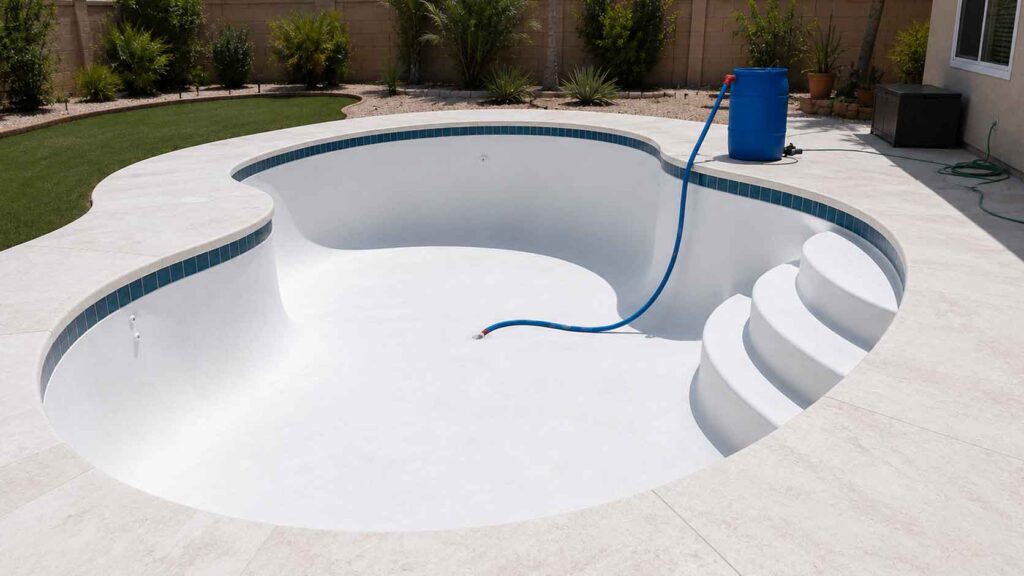
Filling a newly plastered pool sounds simple, but it is one of the easiest places to create permanent defects. A bad fill can leave visible lines, hose marks, debris tracks, or discoloration that the homeowner will see every day.
Watch for these mistakes:
- Turning the water off before the pool is fully filled.
- Letting the hose rest directly on the surface.
- Using the wrong fill path or leaving the hose in one spot too long.
- Allowing leaves, dirt, or other debris to settle on wet plaster.
- Failing to keep the fill continuous.
These errors often create the kinds of stains and rings that are hard to explain away later because they are literally built into the finish.
Brushing and Cleaning Mistakes
Brushing is essential, but brushing the wrong way can cause just as much trouble as not brushing at all. The same goes for cleaning tools and vacuum equipment.
Pool plaster mistakes in this area often include:
- Using wire brushes or harsh abrasive tools on new plaster.
- Vacuuming too soon with wheels or hard contact points.
- Scrubbing stains with overly aggressive pads.
- Treating roughness with acid too early or too often.
- Letting service techs use whatever tool is nearby instead of what the finish needs.
The goal is to clean the surface without tearing it up. Fresh plaster especially needs soft-bristle brushing and careful handling until it has fully cured.
Mix and Finishing Mistakes
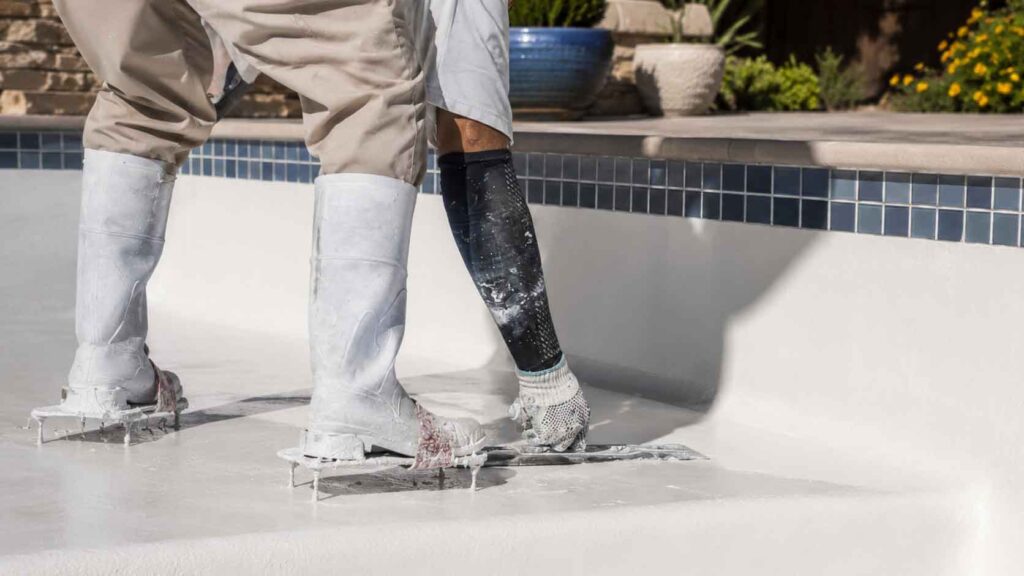
Some of the worst plaster problems begin before the material ever hits the pool shell. If the mix is off, the application can be off, and the finish will reflect that later.
Common mistakes here include:
- Using the wrong water-to-cement ratio.
- Inconsistent batch mixing.
- Contaminated sand or aggregates.
- Unapproved additives.
- Over-troweling or burnishing the surface.
- Leaving thin spots, cold joints, or uneven thickness.
These issues can lead to crazing, mottling, soft spots, roughness, or early failure. In other words, bad finishing does not stay hidden for long.
Bonding and Surface Prep Mistakes
If the shell or old surface is not properly prepared, plaster will eventually let you know. Bond failure often starts with what was left behind before the new finish was applied.
Look out for:
- Dust, laitance, or debris on the substrate.
- Loose old plaster that was not removed.
- Poor bond coat coverage.
- Moisture or contamination between layers.
- Applying new plaster over a questionable base.
These are the mistakes that lead to hollow sounds, pop-offs, peeling, and delamination. Once a finish loses bond, the repair conversation gets much more expensive.
Long-term Maintenance Mistakes
Even a good plaster job can be damaged by bad maintenance. This is where homeowners and service companies can either protect the finish or slowly wear it down.
The biggest long-term mistakes are:
- Letting water chemistry drift for weeks at a time.
- Overusing acid washes.
- Ignoring early roughness, stains, or scale.
- Using harsh tools for routine cleaning.
- Allowing metal staining, organic buildup, or scaling to sit too long.
A pool finish is not maintenance-free. It needs regular care, and the kind of care matters just as much as the frequency.
Replastering Mistakes
When a pool is already failing, the renovation process itself can create new problems if the underlying cause is ignored. Too many replaster jobs are done as cosmetic fixes instead of true corrective work.
Common replastering mistakes include:
- Plastering over a surface that should have been fully removed.
- Skipping proper repair of bond failure or shell damage.
- Not correcting the chemistry or startup problem that caused the original failure.
- Choosing the wrong finish for the pool’s environment and usage.
- Rushing the schedule and compromising prep or cure time.
If the original problem is still there, the new surface is just buying time.
How Pros Can Prevent Most Pool Plaster Mistakes
Most pool plaster mistakes can be reduced with discipline and consistency. The best crews do the basics well every time.
That means:
- Proper shell prep.
- Correct mix ratios.
- Careful troweling and uniform thickness.
- Controlled startup.
- Balanced water.
- Appropriate brushing and cleaning.
- Early attention to warning signs.
Plaster is a durable finish when it is installed right and maintained right. The trouble starts when people cut corners and then expect the surface to perform like nothing happened.
Final thoughts on the subject
Pool plaster is one of those finishes that tells the truth over time. If the job was rushed, the shell was dirty, the startup was sloppy, or the water chemistry was ignored, the damage will show up eventually. The most reliable way to protect a finish is to avoid the pool plaster mistakes that create problems in the first place.
For plasterers, builders, and service pros, that is also the best way to reduce callbacks, protect your reputation, and deliver a finish that actually lasts.