
- July 3, 2026
- Universal White Cement
- Pool Plaster
- No Comments
How Long Does Pool Plaster Last?
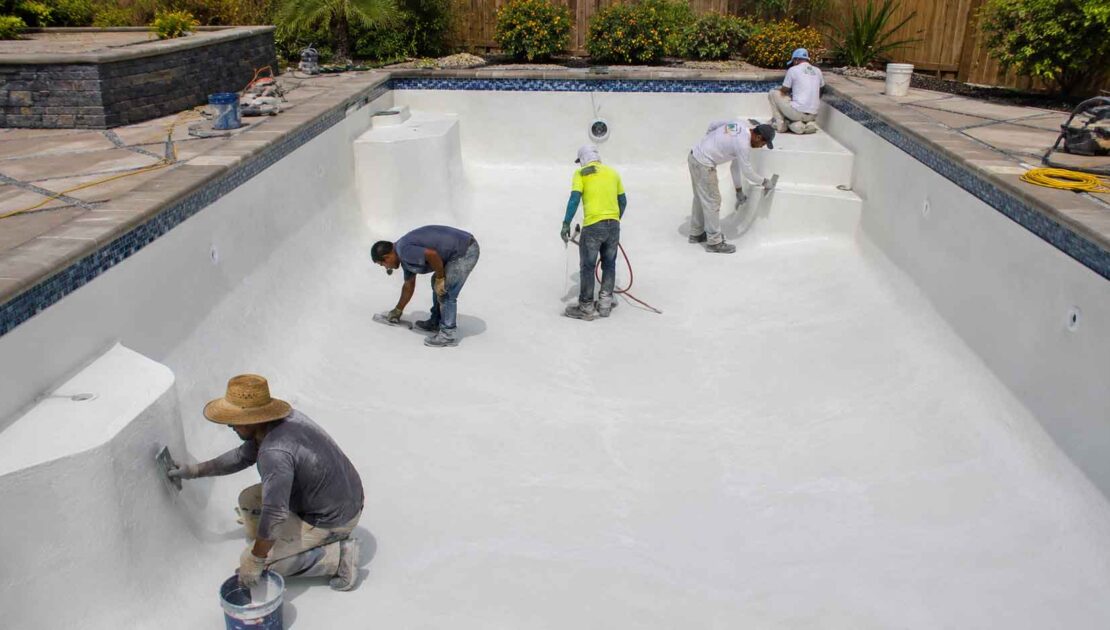
Properly applied and properly cared‑for pool plaster should be a long‑term finish, not a disposable one. With a quality white cement-based plaster, the goal is measured in decades, not in “5–7 years and we’ll see what happens.”
Below is field-oriented guidance from a plaster perspective, assuming you’re working with a high‑quality universal white cement and want to deliver the longest possible service life for your customers.
Pool Plaster Lifespan: What You Should Be Aiming For
With good materials, sound application, and decent water care, white cement plaster should routinely deliver 15–20 years of service, and often more. That’s the benchmark you want in your head when you’re specifying materials, training crews, and talking to homeowners.
The big caveat is that plaster doesn’t fail on its own. When you see a pool that “only got 7 years,” you’re usually looking at the result of one or more upstream issues: aggressive water, poor startup, improper mix, or shortcuts in prep. As a pro, your job is to control the factors you can (materials, workmanship, startup instructions) and educate the homeowner about the ones you can’t (daily chemistry).
When you’re using a quality universal white cement, you’re starting from a strong base. The cement can support long life; the system around it has to cooperate.
Factors That Really Determine How Long Plaster Lasts
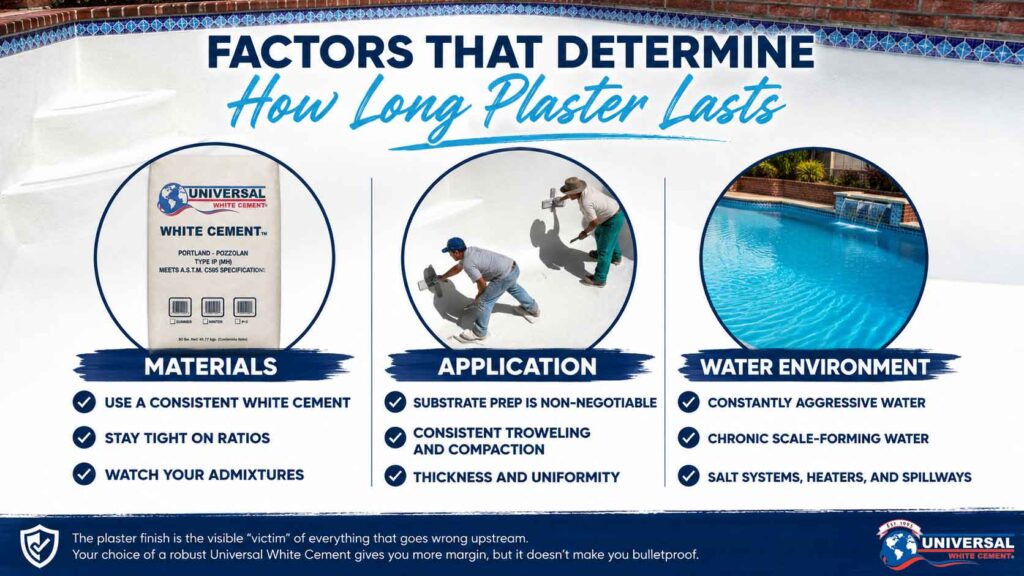
Think of plaster life as a three‑legged stool: materials, application, and water environment. If any one of the three is weak, service life drops.
Materials
- Use a consistent white cement. Universal white cement is designed to give you a clean, bright, reliable base for pool plaster, with controlled performance and color.
- Stay tight on ratios. Excess water in the mix, contaminated sand, or off‑spec aggregates will show up later as reduced density, increased porosity, and more vulnerability to etching and staining.
- Watch your admixtures. Air entrainment, accelerators, and other additives should be compatible with the cement system. The more “mystery admixture” you toss in the truck, the less predictable the long‑term performance.
Application
- Substrate prep is non‑negotiable. A dirty, chalky, or poorly bonded shell is the fastest way to undercut good cement. The surface must be clean, sound, and properly etched or mechanically prepared.
- Consistent troweling and compaction. Over‑troweling, burnishing, or leaving cold joints and variations in thickness will translate into uneven wear and color variation down the road.
- Thickness and uniformity. Maintain specified thickness across the entire vessel. Thin sections, sharp transitions, and skimmed steps or benches are high‑risk areas for premature wear.
Water Environment
- Constantly aggressive water (low pH, low alkalinity, low calcium, negative saturation index) will attack even the best white cement plaster.
- Chronic scale-forming water (high calcium, high pH, positive saturation index) can create crusts and nodules that eventually require aggressive removal – which then beats up the plaster.
- Salt systems, heaters, and spillways all create localized zones of higher stress. Poor circulation, localized chemical addition, and poor equipment sizing can shorten life in those areas.
The plaster finish is the visible “victim” of everything that goes wrong upstream. Your choice of a robust universal white cement gives you more margin, but it doesn’t make you bulletproof.
What “End of Life” Looks Like in the Field
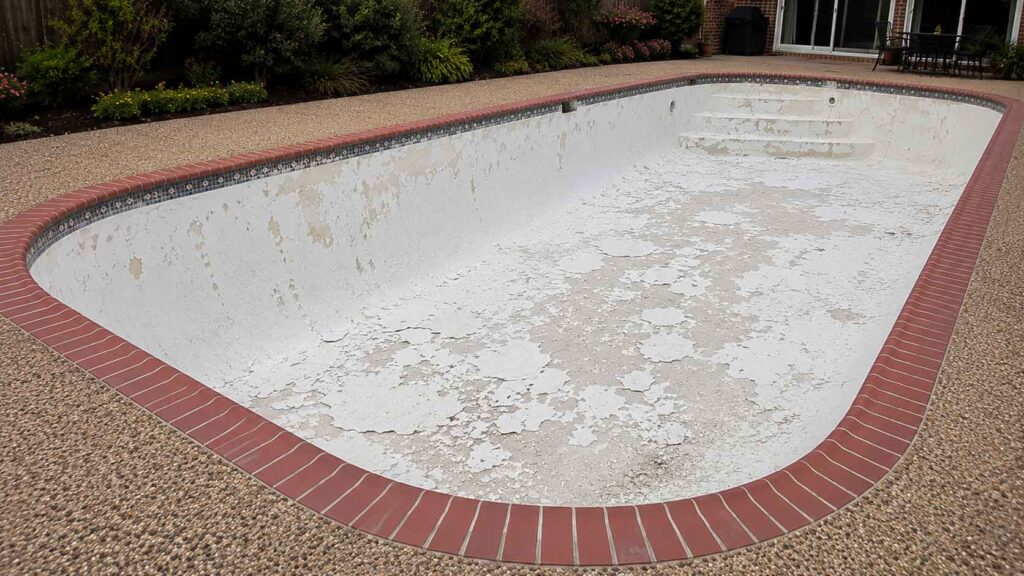
You need to be able to walk into a backyard and distinguish normal aging from true end‑of‑life failure.
Common end-of-life indicators:
- Roughness and pitting underfoot. When the surface has lost its cream and aggregate is exposed across large areas, you’re past normal aging.
- Widespread etching or soft areas. Softer, chalky zones show where aggressive water has eaten into the paste.
- Hollow spots and delamination. If tapping reveals large areas that sound hollow, or sections are debonding, you’re looking at substrate or bond issues, not just cosmetic wear.
- Deep, non-removable stains. Metal contamination, organic stains, and scale that no longer respond to targeted treatment can be signs the surface has reached its limit.
Normal aging:
- Mild mottling and color variation. White cement-based plaster will naturally develop some shade variation over time, which isn’t automatically failure.
- Light surface roughening in high-traffic areas. Steps, benches, and shallow ends see more wear; a little texture over the years is expected.
“Ugly” does not always equal “failed,” but when structural and comfort issues show up together, it’s time to talk resurfacing.
How to Extend Pool Plaster Life – Things Pros Control
If you want universal white cement plaster to hit that 20‑year mark, here are the controllable levers on the pro side.
Before and During Application
- Respect the manufacturer’s mix design. Don’t improvise ratios in the field. A universal white cement is engineered for a specific water‑to‑cement range and admixture compatibility.
- Control your jobsite water. Dirty, hard, or unknown water sources on the job can contaminate the mix. Use clean water and know its basic parameters when possible.
- Manage temperature and timing. Extreme heat, rapid drying, or rush jobs with insufficient curing windows are enemies of long-term performance. Shade, misting, and scheduling all help.
Startup
- Follow a disciplined startup procedure. Fill as soon as the manufacturer recommends, and then control pH, alkalinity, and calcium carefully during the first 30 days.
- Avoid “chemical shock” events. Dumping large quantities of acid or chlorine in one spot can scar a new white plaster surface permanently.
- Brush consistently. New plaster needs regular brushing to even out hydration, remove plaster dust, and develop a uniform surface.
A gentle, controlled startup gives the plaster a huge long‑term advantage.
Extending Pool Plaster Life – Things Homeowners Need to Understand
No matter how good the cement or the workmanship is, the homeowner ultimately lives with the chemistry. You can dramatically increase plaster life by educating them (or their service company) upfront.
Key messages:
- Water balance is critical. pH, alkalinity, and calcium hardness should be kept within recommended ranges consistently, not just “fixed when something looks off.”
- Regular testing and small adjustments are best. Encourage gentle nudges in chemistry rather than big swings from one extreme to the other.
- Avoid frequent drain-and-acid washes. These might make the pool look whiter short‑term, but they strip years off the plaster in the process.
- Use appropriate tools. Metal brushes, razor scrapers, and aggressive scrub pads can gouge white cement plaster and create weak spots that stain and deteriorate faster.
A simple care sheet or startup handbook, branded around universal white cement and your standards, can prevent a huge amount of avoidable damage.
Why Universal White Cement Matters from a Pro’s Perspective
From a plasterer’s point of view, you want a cement that is:
- Consistent from batch to batch, so you don’t fight color shifts and unpredictable set times.
- Appropriate for pool environments, with good resistance to typical water chemistry swings and UV exposure.
- Compatible with the sands, aggregates, and admixtures your crews already use in the field.
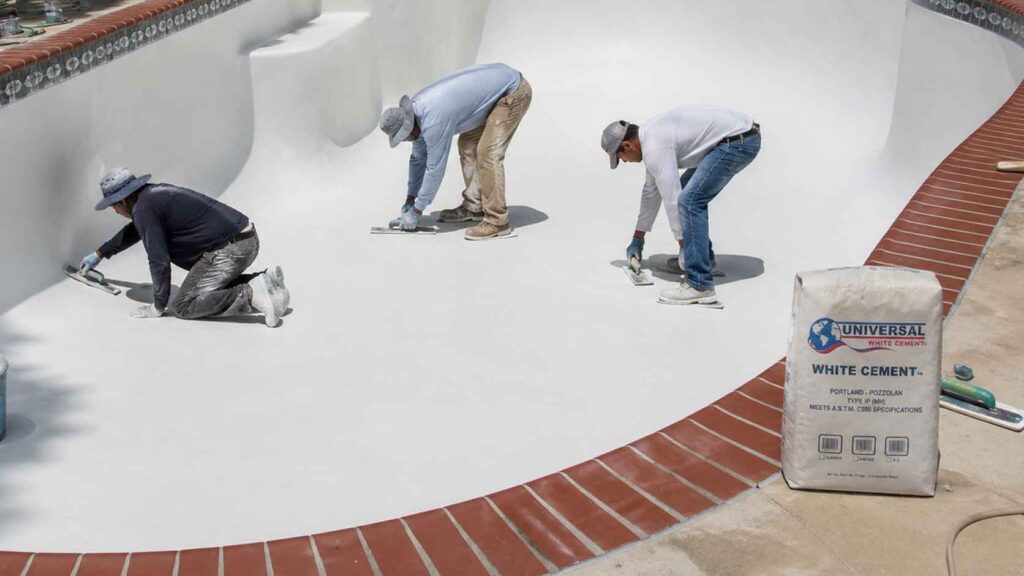
Universal white cement is designed to give you that stable base. It won’t fix a bad mix, a dirty shell, or an abusive water environment—but it does remove a lot of variability on the material side. That lets you focus on process and training rather than “babysitting” an unstable cement.
With solid universal white cement plus disciplined prep, application, and startup, you put that pool on a very different trajectory than the average “hope it lasts 7 years” job. The finish will still age—it’s cement in water, not a diamond—but it will age more gracefully, with fewer callbacks and better long-term performance.
Talking About Lifespan with Customers and Builders
A few practical points for your day‑to‑day conversations:
- Set realistic expectations. Don’t promise “maintenance‑free” or “perfect surface forever.” Promise a long service life if they follow basic care, and explain what that care looks like.
- Separate workmanship issues from chemistry issues. Make it clear that some failures are on the build side, and some are on the maintenance side. That protects your reputation and helps everyone learn from problems.
- Use lifespan as a selling point. When you’re bidding against lower‑quality materials or shortcuts, explain that the choice of universal white cement and a proper startup is the difference between resurfacing in 7–10 years versus enjoying a finish for 15–20+.
Approach every job with that mindset—universal white cement as the backbone, and your processes as the protection—and you’ll consistently deliver plaster that does last, with the field results to back it up.